
The recruiting industry spent years getting really, really good at going fast.
Faster sourcing. Faster screening. Faster scheduling. Faster offers. Speed is all you need, apparently!
Then you wonder…Did we hire the right person?
That takes a while to answer, doesn’t it?
Stephanie Boman, Chief People Officer at LiveRamp, worked through this problem with Colleen Gallagher on the latest episode of The Talent Bar. Her argument is not that speed stopped mattering. Speed does matter. It just should not be the only thing your hiring system rewards.
You can close a role in 24 days and still regret the decision for the next 24 months.
In the pursuit of a faster hire, recruiters forget that the real focus should be on making better decisions while the hiring process is underway.
And only that can bring you quality hires that add value to your organization.
Here are 8 interesting ways to improve quality of hire based on that conversation.
Let’s start with a fun number.
Teams actually interviewed roughly 52% more candidates per hire in 2026 than in 2021.
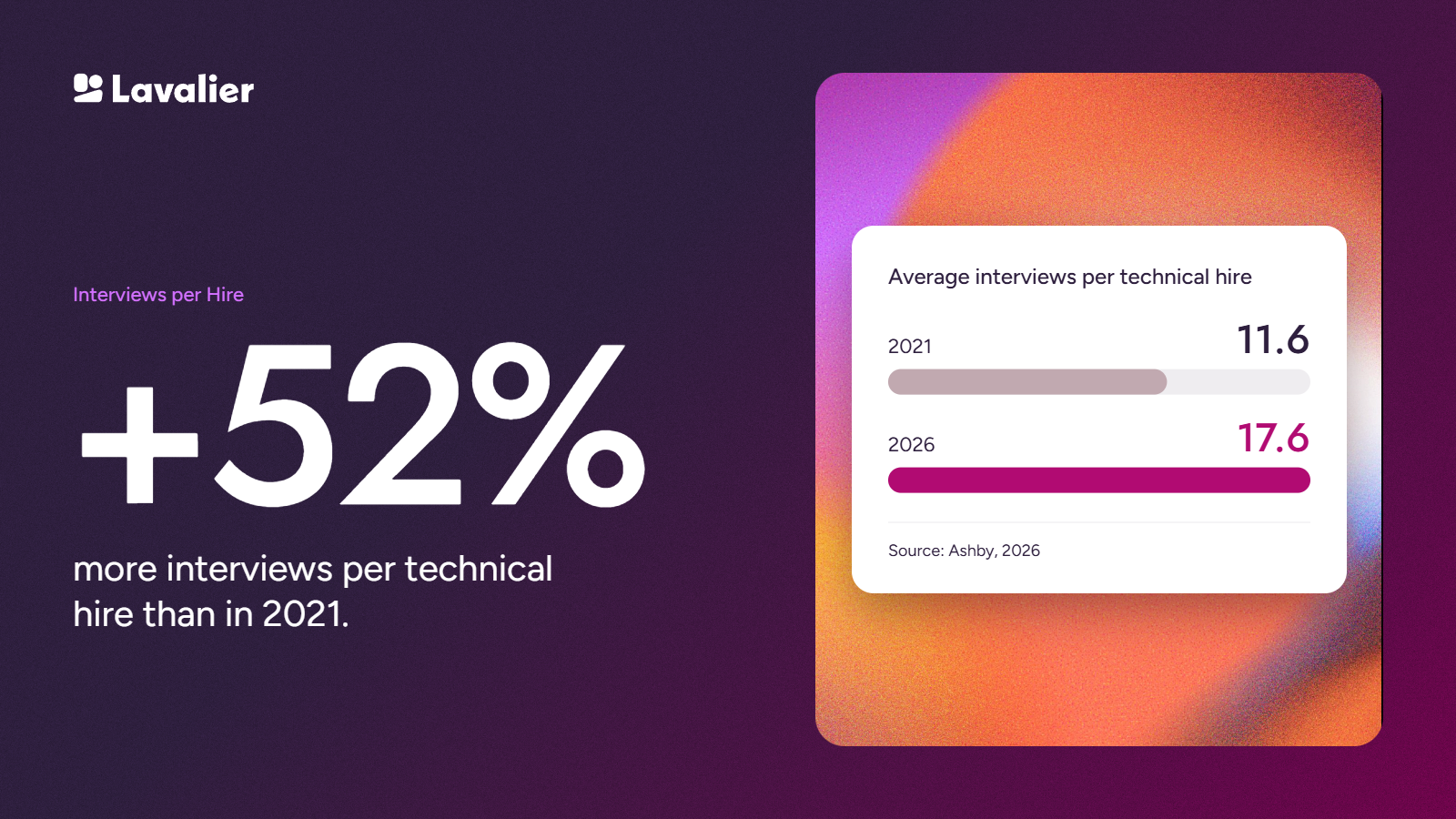
That tells us that recruiting responded to the quality problem the way most of us respond to any problem, which is by doing more of the same thing and hoping it works out.
It did not. More interviews with no agreed criteria give you more opinions and nothing to settle them with.
Boman has eight lessons for teams stuck in that loop. Spoiler alert: it does not involve booking another round of interviews!
You can know a job description inside out and still misunderstand the job.
Boman argues that great recruiters go one level deeper. They want to understand why this role matters now and what problem the new hire is supposed to solve. That business curiosity is one of the qualities she sees in the strongest recruiters.
“The best recruiters know the market the way a great salesperson knows their territory.”
Think about a good salesperson. They know their customers and their competitors. They can tell you what changed in their market last quarter and which accounts are worth going after next.
Boman wants recruiters to work the same way. That means understanding the business problem behind the opening, not just the list of requirements.
For instance, a sales team may ask for another representative because it is entering a new market. Or because the current team keeps losing bigger accounts.
That same title demands different kinds of hires.
Once the recruiter understands that difference, they can also explain the opportunity properly to candidates. And when a hiring manager asks for something unrealistic, they have enough context to push back.
The rule, if we had to call it that, is this: Before you search for the person, understand the problem they are being hired to solve.
Understanding the problem is only useful if it changes who you look for.
As a recruiter, you need to turn the hiring manager’s wishlist into a much shorter list of things the person actually needs to succeed.
Otherwise, every preference has a way of becoming a “must-have”. It’s not rare for five years of experience and a certain title to become requirements only because the last successful person happened to have it.
Before sourcing, sort the requirements into three buckets:
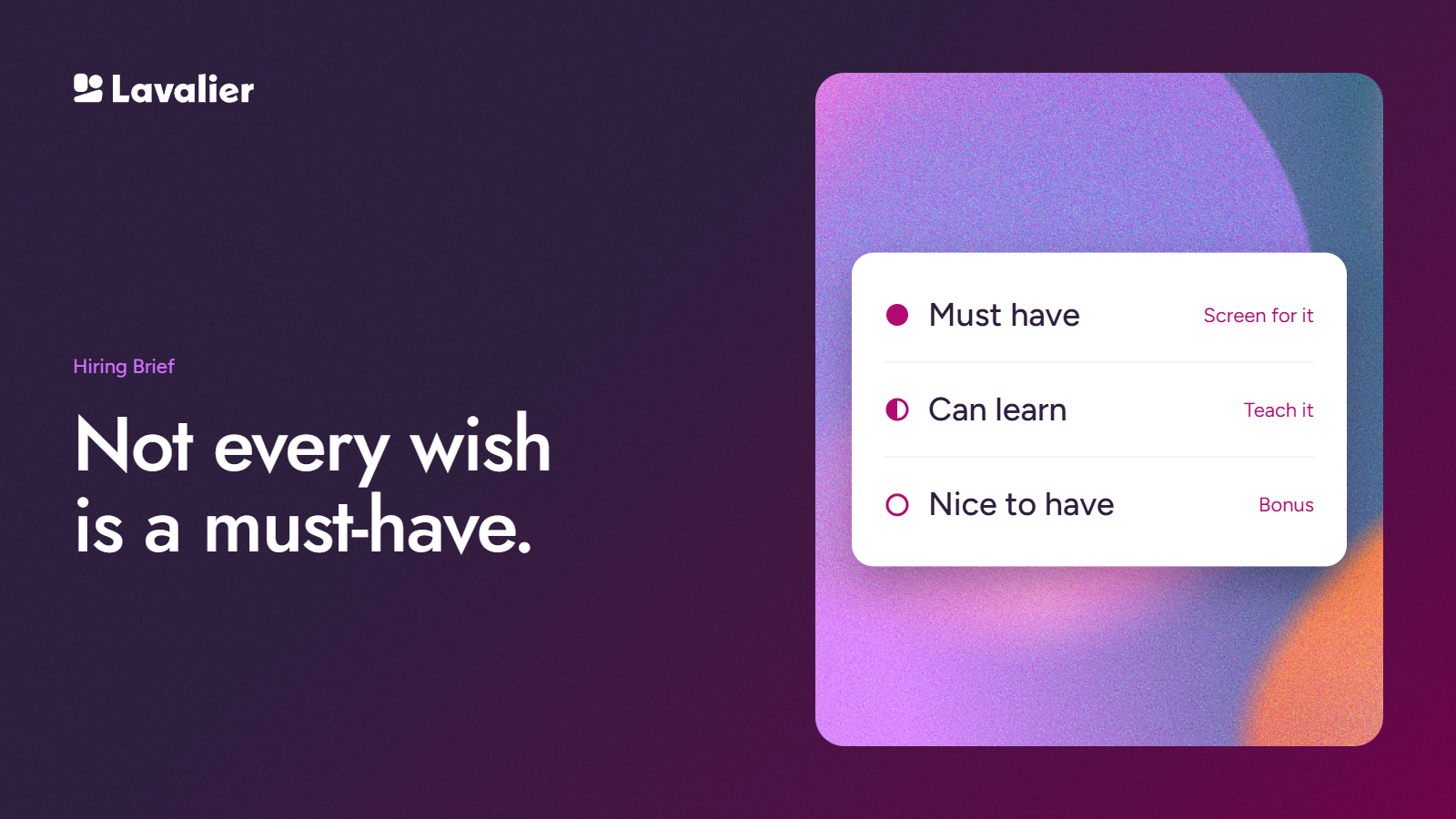
Take an enterprise sales role. Selling into buying committees of six or more people is a must-have, because deals stall without it. Learning your product category is something a strong seller picks up in a quarter. Experience at a direct competitor is nice to have and never worth losing a good candidate over.
Market knowledge is very important in this regard. A good recruiter must know when the hiring manager is asking for a combination of skills that is rare and where the demands are simply too lofty. Without that context, it is hard to tell the difference between a demanding search and an unrealistic one.
By this point, you should have a clear picture of what the person needs to be able to do.
And once you know that, the next question becomes much easier: how will you prove during the interview that a candidate can actually do it?
When quality of hire is the goal, you need to decide upfront what proof would convince you that someone can succeed in the role.
“More and more studies or research are pointing to the fact that the front-end planning... being more efficient and effective around pre-hiring, structured interviews versus gut feel... ends up feeding into part of the quality-of-hire formula.”
For each must-have requirement, write down two things.
Then assign each interviewer a specific area so the same ground does not get covered four times.
Without that, four people run four different interviews and compare four different impressions.
By doing so, you’re agreeing on what is important to the organization and the role before meeting candidates, then building interviews around those things.
Otherwise, the criteria can change quick once someone impressive walks into the room. One interviewer loves their confidence, another likes their background and a third simply has a “good feeling.”
Structure, however, gives everyone the same question to come back to: Did this person show us they can do the job we actually need done?
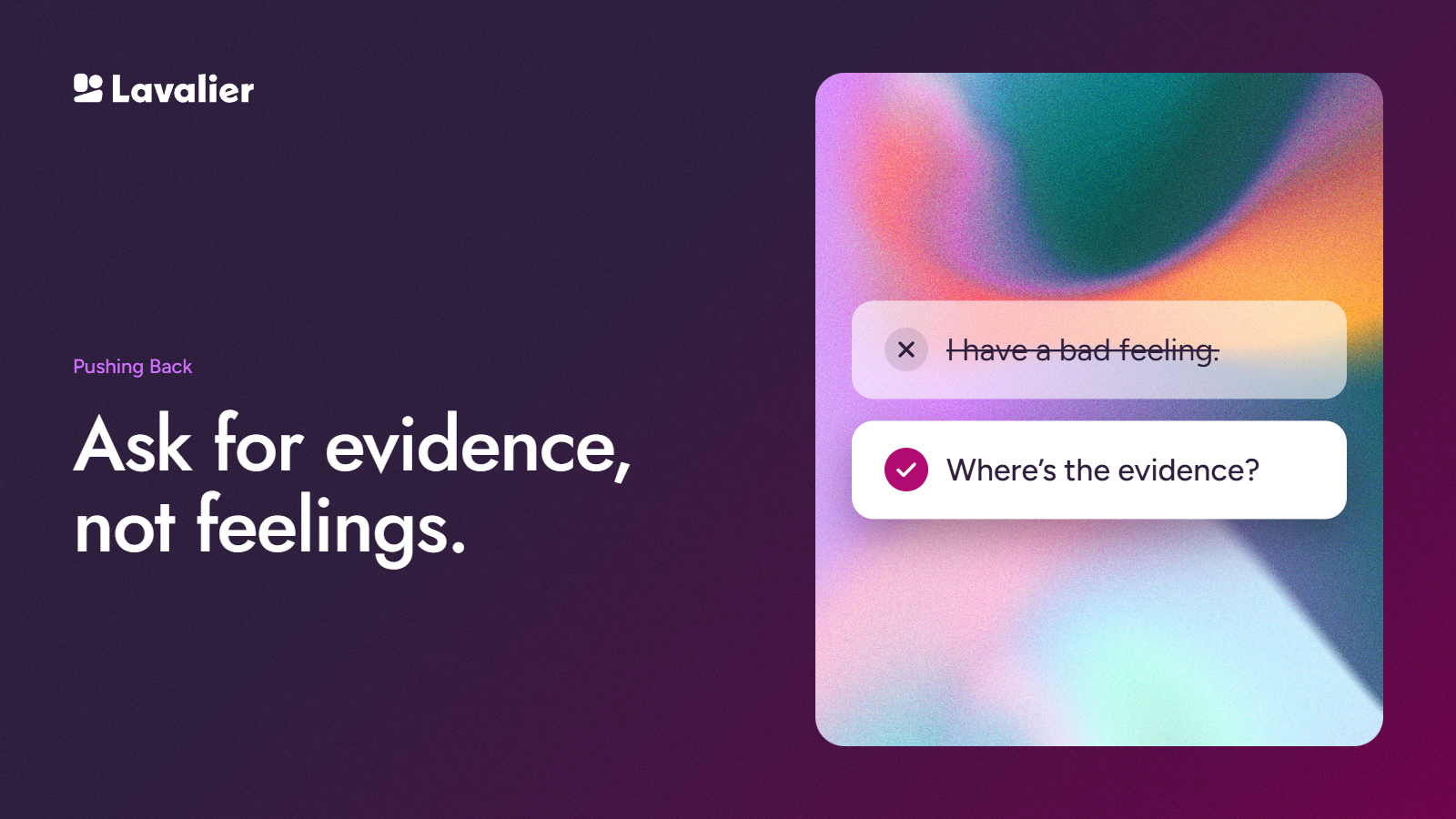
That is a much stronger foundation for the next part of Boman’s argument: having the courage to challenge a hiring manager when the evidence says no.
A recruiter who agrees with the hiring manager every time is not adding much to the decision.
Part of the job is knowing when to push back, especially when enthusiasm for a candidate starts outrunning what you have actually learned about them.
“I know you love this candidate, but I’m not sure if they can actually do the job.”
That can be an awkward sentence to say to someone who is responsible for filling the role. But it is also where a recruiter needs to also act as an advisor.
You don’t have to win an argument or overrule the hiring manager. Just slow down a decision that may be running on familiarity or gut feel and make sure the uncomfortable questions still get asked.
That might sound like:
Your value as a recruiter is partly in seeing the wider picture. You have spoken to more candidates, know the market better, and can compare what the hiring manager wants with what the evidence actually shows.
So when those two things do not match, say it.
The same courage applies on the candidate side.
Recruiters have a duty to make the opportunity attractive. But that does not mean making it sound better than it is.
If the role is messy, say so. If the manager expects long hours, explain that. If the candidate wants something the company cannot offer, do not leave them to discover it after joining.
“A great recruiter holds both sides of the conversation with integrity. The business needs honesty about what’s realistic, but the candidate deserves transparency too. Where do they stand in the process? What does it actually look like? We’ve all had that experience of going into a black hole after an interview.”
Boman’s point is that overselling may help you close the hire, but it can damage your credibility when the person realizes six or nine months later that the job is not what they expected.
A more useful candidate conversation covers three things:
You don’t have to convince every strong candidate to say yes. You just have to make sure the people who do say yes understand what they are saying yes to.
Sometimes a candidate walking away is the better recruiting outcome.
By this point, you've noticed that the valuable parts of recruiting require judgment.
Understanding the role, testing evidence, pushing back on a hiring manager, and talking honestly with candidates are all human work.
Naturally, this makes AI most useful when it clears space for more of that work.
Boman describes LiveRamp’s approach as “People + AI.” They let AI handle repetitive work while employees move toward higher-value thinking. That same makes sense in recruiting.
For example:
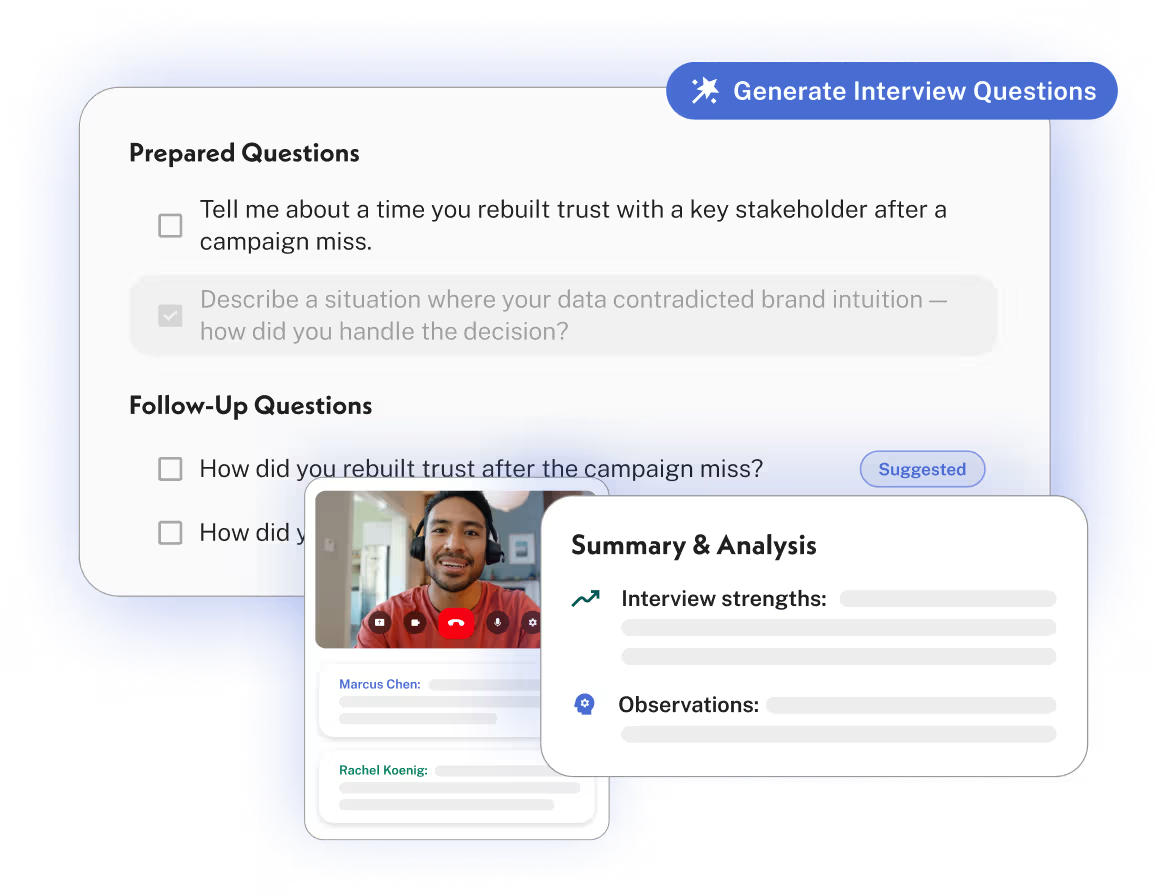
That is also the idea behind Lavalier, an AI-powered interview intelligence platform. Lavalier can turn an intake meeting into an interview plan, guide interviewers live during the conversation, and turn what the candidate said into evidence you can compare across a dashboard.
Despite its intelligence, Lavalier does not rank or recommend candidates. The hiring team still makes the call.
The point is, use the machine to organize and help with the hiring process. Keep the deciding to yourself.
And if all of this produces a better hiring decision, there is one last question to answer: did the hire actually work?
Boman explains:
“Quality of hire is super challenging because it can’t directly be observed in real time. It’s inferred from outcomes that emerge months, or sometimes even years, after someone starts... I don’t believe it’s just one single indicator.”
That difficulty is the reason why quality of hire is worth measuring. If you stop measuring when the offer is accepted, you only know that the recruiting process ended. You do not know whether it produced someone who performs well and succeeds in the role.
Without that feedback, hiring teams have no reliable way to tell which parts of their process are working and which ones need to change.
Speed still matters, of course. Time-to-fill can tell you whether a search is dragging or moving efficiently. But it cannot tell you whether the decision itself was a good one.
The problem is that there is no single number that captures quality of hire. So instead of looking for one perfect metric, Boman recommends looking at several signals together:
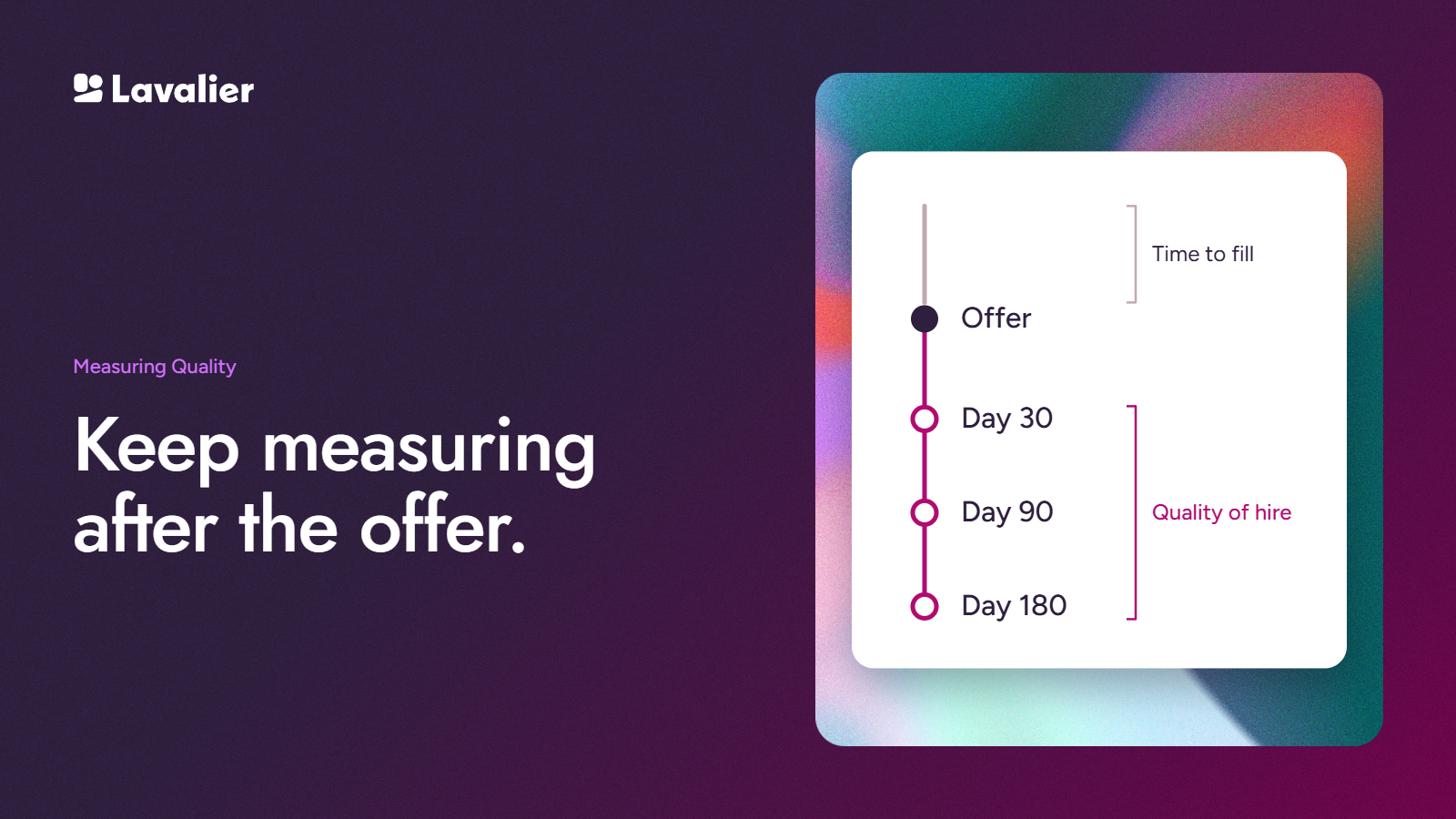
Together, these signals give you a much better idea of hire quality than time-to-fill ever could.
But measurement is only useful if it changes what you do next.
Finally, you might ask the question: What do you do with knowing the quality of the hire anyway?
Make better decisions going forward.
Go back to what you believed when the search began and compare it with what actually happened after the person joined.
Maybe the skill everyone obsessed over barely matters on the job. Or maybe a concern raised during interviews turned out to be important. Maybe one interview question consistently gives you better evidence than the others.
That is useful recruiting data. It also gives you a feedback loop. Each hire teaches you something about what to look for and what to change next time.
With time, that turns hiring into a process of continuous improvement rather than a series of isolated decisions.
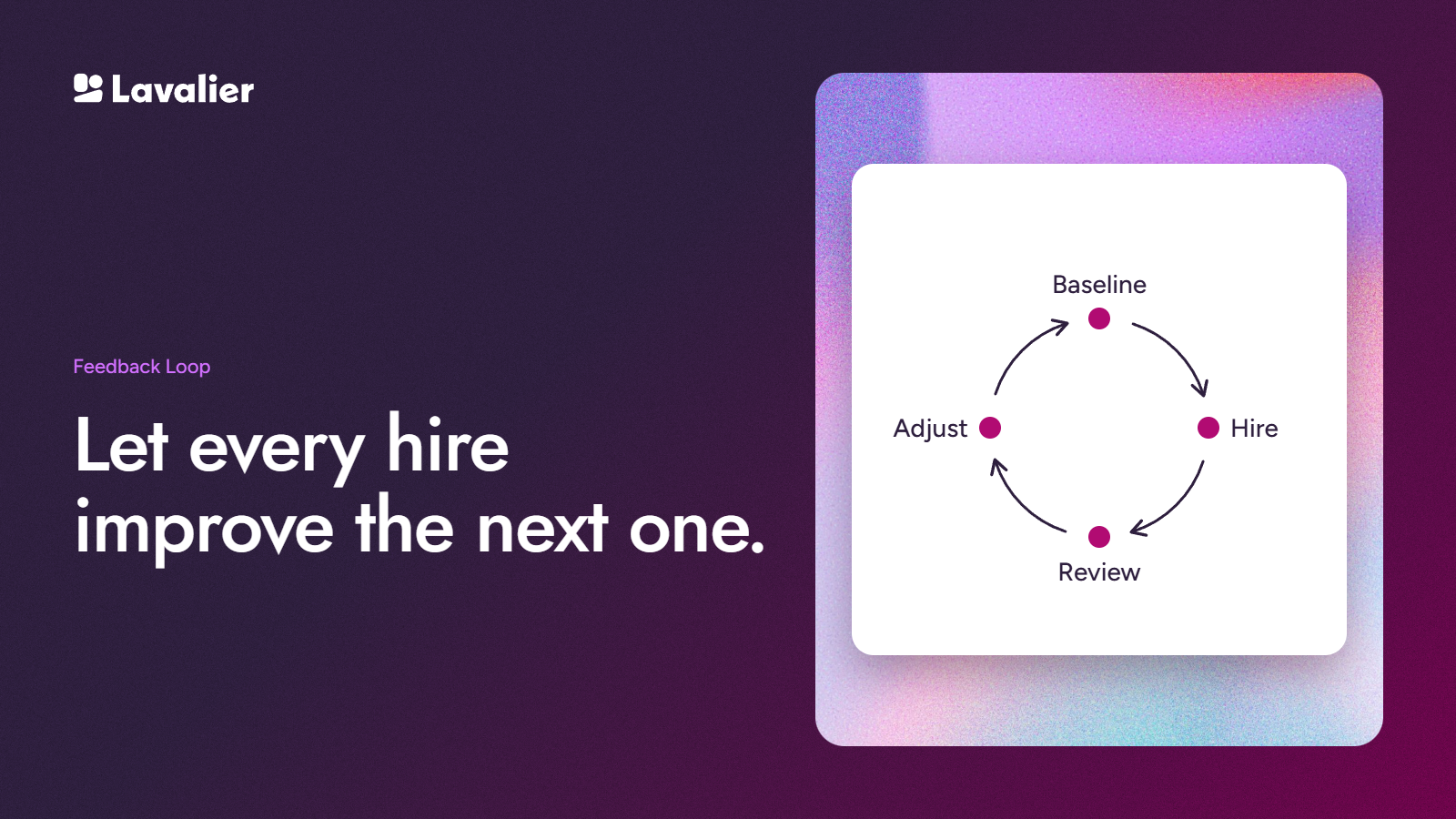
You can measure that improvement with a simple review that cover these basics:
The reverse matters too. If something you treated as an optional requirement keeps showing up in your strongest hires, perhaps it deserves more focus.
As time goes on, this creates a loop:
Find your baseline of a quality hire → hire against it → see what happened → adjust for upcoming hires.
That being said, one hire will not tell you much. Start with three or four roles of the same type and look for what repeats across them. Your first baseline is a guess, and that is fine. Each round of hires makes it less of a guess.
Then the next time a role opens, you are not starting again from a job description and a collection of opinions. You will have evidence from the people you already hired.
As Boman puts it, “You spend time, you spend resources identifying a critical hire. You want that person to be successful.”
That is really the standard everything else in the process should serve. Filling the role faster is a small win. A decision that still looks right a year later is the one worth building your process around."
Eight lessons is a lot to hold in your head before your next intake meeting.
Lavalier holds most of them for you.
It turns the intake plan into an interview plan and keeps interviewers on the criteria you agreed on.
Lavalier also automatically analyzes hiring signals in every interview, including cognitive problem-solving, past performance, learning and adaptability, resilience, communication, AI and tools fluency, and values fit.
What it will not do is pick for you. That part is still yours.