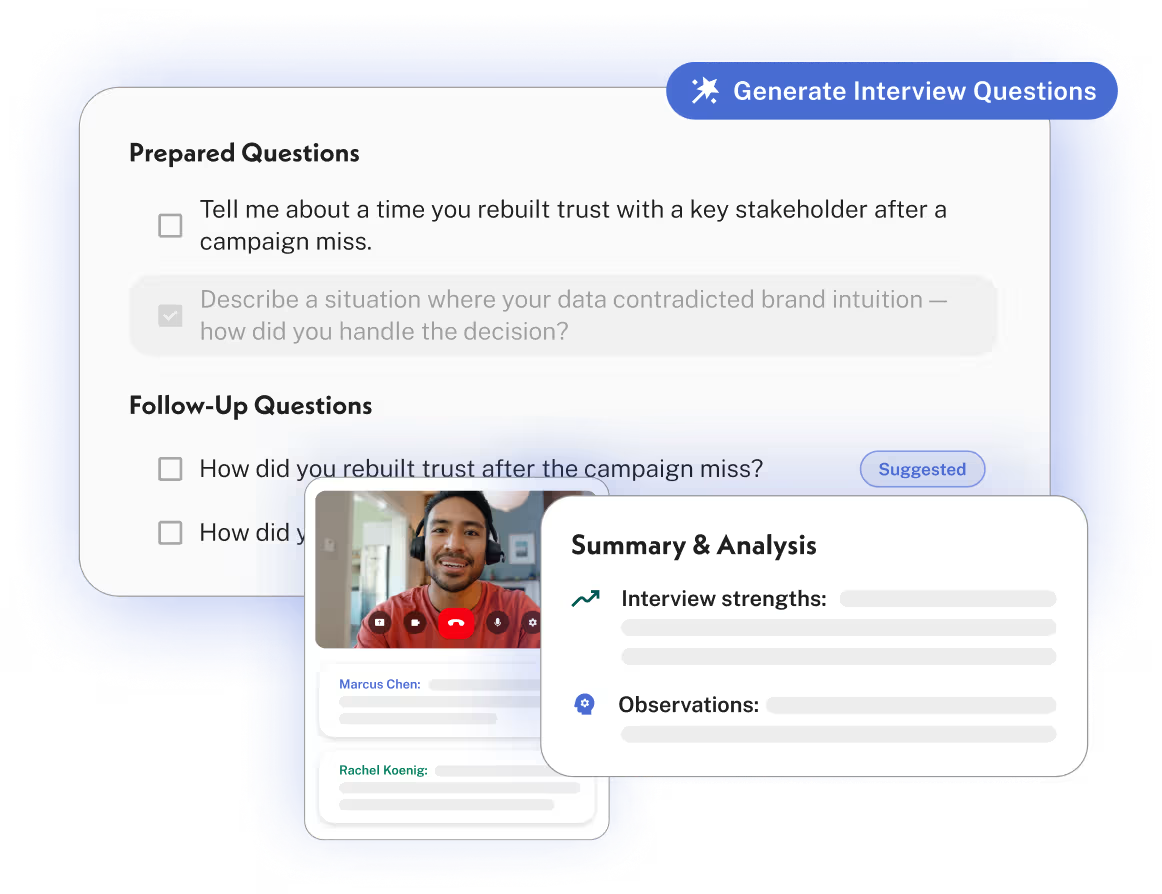

Everyone who hires has an opinion about where AI belongs in the process. Some see it as the fix for application overload, candidate fraud, and their own unreliable interviewing. Others worry about what it means for fairness, candidate experience, and quality of hire. Most talent leaders land somewhere in between.
If you're weighing an AI hiring tool, it's worth knowing how the people building it think about these things. That's the idea behind a new series of conversations with the people who build Lavalier—this is the first one.
We're starting with Josh Potter, who leads people operations and recruiting at Textio.
Josh is a talent leader with the same pressures as any other, with one interesting difference: his team hires with Lavalier, and the people he hires are the ones building it. That puts him on both sides of the question.
We asked Josh how he thinks about the questions every hiring team is weighing right now: how to run a good interview process, how to make great hiring decisions, and where AI fits in. Here's what he told us. Quotes have been lightly edited for length and clarity.
No more than four, according to Josh. Beyond that, he says, extra rounds and extra interviewers don't lead to better hires.
"If I could ban one practice tomorrow, it would be companies running way too many rounds with way too many people involved," Josh says. "There's research showing you don't need more than four rounds or four interviewers to make a sound hiring decision." He's pointing to Google's "Rule of Four" research, which found that four interviews predicted the hiring decision with 86% confidence. Each interviewer after the fourth added less than 1%.
Josh said he's heard from candidates who went through seven, eight, or nine rounds with no idea when the process would end. "If those extra rounds added something to the decision, that would be one thing," he says. "But the data shows they don't."
Because the hiring team evaluates the whole conversation, not someone's memory of it. Josh says that makes the assessment more objective, and candidates benefit from that.
"I understand where candidates are coming from. It does feel a little weird to know you're being recorded," he says. "But there's a real advantage for you as a candidate. When the hiring team has the full conversation, their assessment is far more objective and evidence-based."
Recruiting has a reputation for decisions driven by bias and gut feel. When a tool like Lavalier records and analyzes the conversation, the interview team can base its decision on what a candidate actually said.
Map the evidence from each interview to the competencies the role needs. At Textio, Lavalier's Skills Matrix does that, and it's Josh's favorite feature.
"I know from my experience in recruiting how important it is to evaluate candidates on the competencies tied to the role," he says. The Skills Matrix pulls evidence directly from interviews and lays it out against every competency the role requires, so the hiring team gets a snapshot of how strong a fit each candidate is.
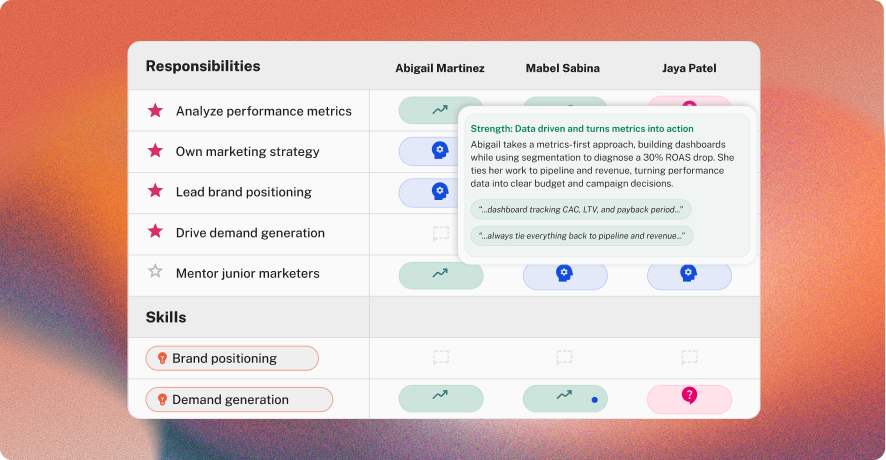
"I haven't seen anything else like it," Josh says.
Want to see the Skills Matrix on your own roles? Book a demo of Lavalier.
You make better hires, and you can explain them. Josh says evidence-based decisions are both more accurate and easier to justify than decisions made on gut feel.
"When it's time to explain why you made a hire, you have a clear justification for it," he says. "Gut feel is a lot harder to justify, and it's harder to get people bought into a decision that rests on it."
With evidence, the hiring team can point to exactly why they're bringing someone on, which gives everyone involved a reason to get behind the decision.
Three things changed when Josh's team started hiring with Lavalier: they save time, they're clearer on what they're looking for, and they're more confident in their decisions.
Clarity. "One of the biggest mistakes I see companies make is talking to candidates before they understand what the ideal candidate looks like," Josh says. Lavalier helps his team define the skills, experience, and qualifications they need before the first interview.
Time. Josh used to spend 20 to 25 minutes wrapping up each interview, going back through his notes, the resume, and everything else from the conversation. Now it takes about five. "Lavalier summarizes the conversation, and I can find the exact part of the transcript I need much faster," he says.
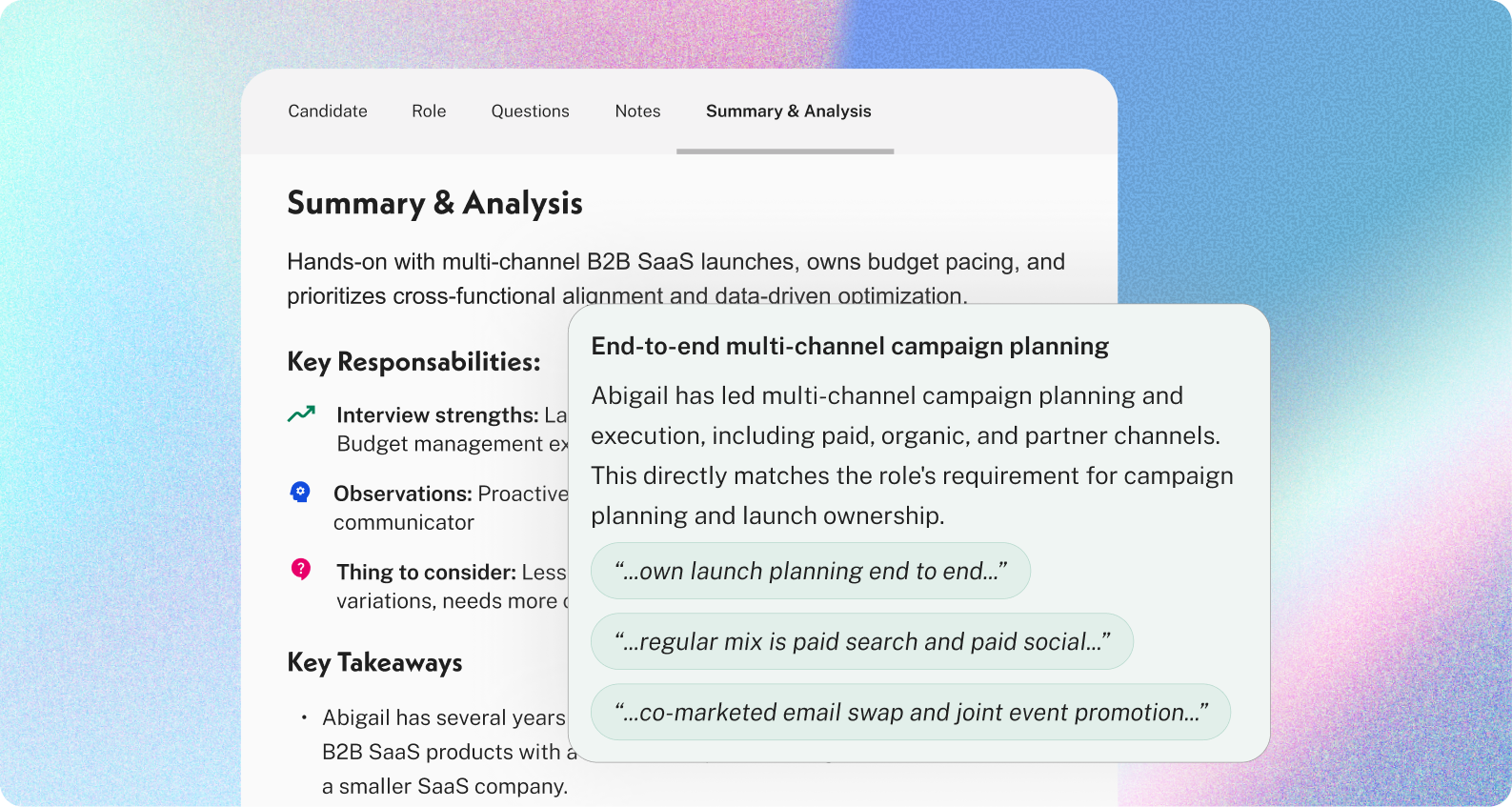
Confidence. Because the team tracks evidence through the entire process, they feel more sure of their hiring decisions. "You never know 100% that someone is the right person for the role," Josh says, "so anything that raises your confidence matters."
Change management, according to Josh. Teams get comfortable with their existing processes, and any new tool interrupts them at first.
"Once you spend a little time getting used to the platform and fitting it into how you interview, it saves you time in the long run," he says.
He says teams notice the difference quickly. Notes get wrapped up faster, it's easy to go back and find exactly what a candidate said, and it's clearer how a candidate's experience compares to what the role needs.
Obviously, using AI doesn't automatically make hiring better, Josh says. Using it the right way does.
His first message to other HR leaders is simple: "I get it." Any new tool comes with hesitation. "But you're going to save a lot of time, and you're going to make more objective, less biased hiring decisions," he says. "In turn, you'll feel a lot more confident about the people you hire."
"Just adding AI doesn't guarantee your hiring process will improve," Josh says. "When it's used the right way, it lets you make more informed, more evidence-based decisions, and that's what makes you confident in them."
Next in this series, we'll talk with Mykel Rangel, Textio VP of Engineering, about how her team genuinely centers humans and optimizes for better hiring outcomes in building AI.
Want to see how Lavalier helps your whole team run structured interviews for the best possible hiring decisions? Book a demo with the team!