
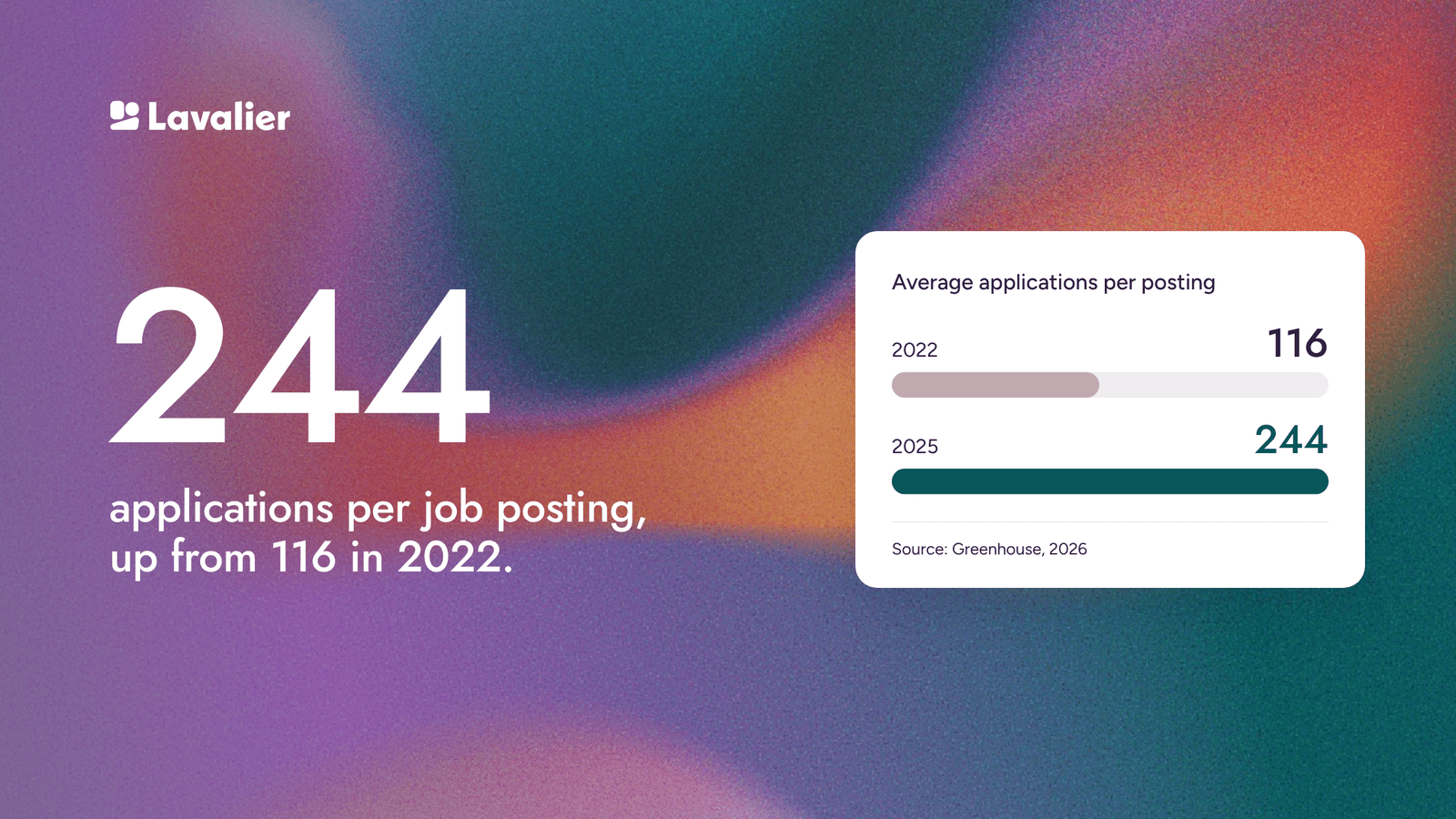
The average job posting pulled 244 applications in 2025, up from 116 in 2022. And over the same stretch, the teams handling that volume got smaller.
Hiring also got slower. Ashby puts a technical hire at 17.6 interviews and 23.3 hours of interview time across everyone a team talks to before someone signs.
And when those hours don't produce a clear answer, the reflex is to add another round. Then another.
Hayden Hughes thinks the solution lands much earlier than that.
He'll also tell you, to some people's irritation, that a good recruiter knows in about 10 seconds whether a résumé is worth a call. The two ideas are the same idea. Those 10 seconds work because of everything the recruiter did before them.
He's spent about two decades in recruiting, from Michael Page to Deloitte, Citi, and eight years at AMS. He now runs a consultancy and is rebuilding talent infrastructure at the Clinton Health Access Initiative.
Talking to Colleen Gallagher on The Talent Bar, he gets to his point by way of Gordon Ramsay's kitchen and a Formula 1 pit stop. The detours are fun, and they circle one idea: most of hiring gets decided before anyone walks into an interview.
Here are nine habits to steal from that conversation.
Great recruiters have a simple rule for intake meetings: they do not walk in empty-handed.
Before the conversation starts, you should already have a point of view. That might mean checking:
Hughes learned this from a role designed to be impossible.
At Deloitte, he was hunting indirect tax specialists with not-for-profit experience in Birmingham, and as he puts it, "there's literally a handful, and they've all been approached." Posting the job would have reached people who had already said no, so the prep work became the whole job.
Hughes compares it to eating at a restaurant. One server asks, “What would you like?” Another tells you the lamb is excellent tonight and recommends the wine that goes with it. The second conversation immediately feels different, because someone has done the homework.
Good preparation helps you earn trust in the first 10 minutes and agree on what a strong candidate actually looks like. It also makes the dreaded conversation 40 days later, when the hiring manager says the entire pipeline is wrong, much less likely.
Early at AMS, a boss handed Hughes Charles Green's The Trusted Advisor, and he ended up working with Green to build training around it.
The book offers a formula that stuck with him:
Trust = (credibility + reliability + intimacy) ÷ self-orientation
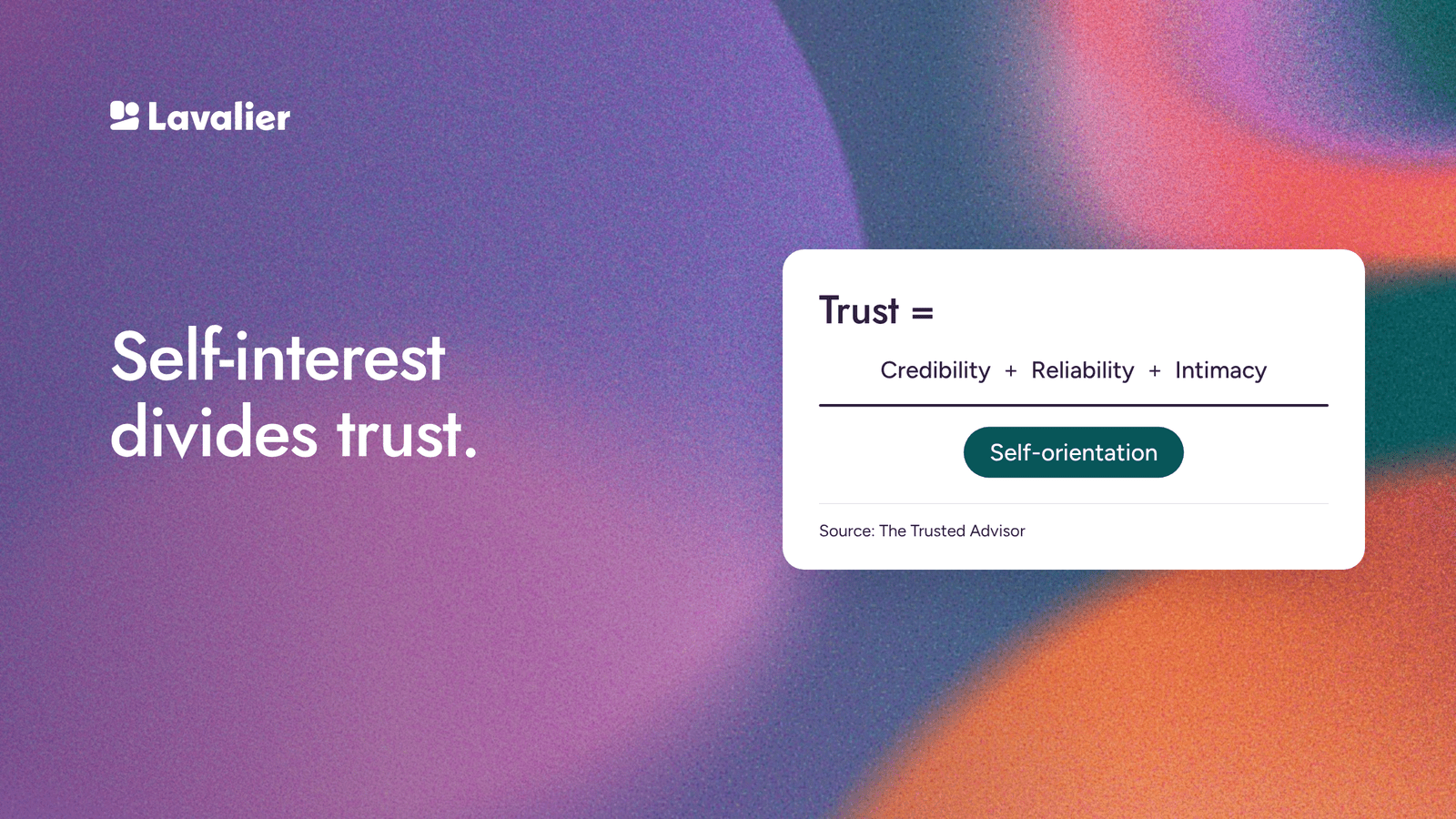
"You can have all of the top three," Hughes says, "but if you are not there being very mindful of your orientation," it doesn't work.
That matters in recruiting because the job arrives with self-orientation built in. You have a requirement to close and a metric attached to it, and a hiring manager can feel when a shortlist was built around your deadline instead of their team.
Most people actually miss out on the reliability part. You can run a warm, sharp intake meeting and still lose the relationship by missing what you promised. "There's no point in saying that you're gonna do stuff, and you can have a lovely meeting," he says. Miss the date and "you've immediately messed up your credibility."
Promise less in the intake meeting than you want to, then hit every date you named. A recruiter who delivers three promised things beats one who offered eight.
Most careers pages are very good at describing who belongs. It’s rare to find one that explains who probably will not enjoy working there.
Hughes thinks they should do both.
He encourages companies to create candidate packs that make the fit clear from both directions. “Here's the things that will mean that you're a good fit. This is what our company's looking for,” he says. Then comes the part employers often avoid: “Here's what we don't stand for.”
AI policies are a good example. Some employers now tell candidates upfront what kind of AI use is acceptable during the hiring process and what crosses the line. “Here's our AI policy. This is what we do say is okay; this is what we're not happy with.”
That shows candidates how the company thinks and lets them decide early whether that environment suits them.
There is a practical upside too. When the boundaries are on the page, the candidates who do show up have already decided they want this version of the job. That makes the screening call shorter and the offer stage less likely to fall apart over something that was knowable in week one.
Hughes is a fan of nudge theory, the idea that small changes in how a choice is presented can change what people actually do.
He uses organ donation as an example. Across Europe, countries that ask people to sign up see donor consent rates around 10 percent. Countries that include everyone unless they opt out see rates closer to 90 percent.
The choice was the same in both cases. Only the starting position changed.
“Great tech, to my mind, should be nudging people,” he says. And recruiting processes should do the same.
A nudge changes the default without taking the choice away. In recruiting, that looks like a structured interview guide that loads automatically when the call starts, so skipping it takes effort, or a feedback form that opens the second the interview ends
The strongest one is a scorecard an interviewer has to submit before they can see anyone else's ratings, which stops the room from converging on whoever spoke first.
That matters because hiring quality does not always need another training session or another interview round. Sometimes the better fix is designing a process that pushes people toward better decisions every time they use it.
Skills-based hiring makes sense. The problem is how quickly it can turn into a very expensive spreadsheet.
Hughes has seen large talent teams spend months building elaborate skills frameworks that barely change the way anyone gets hired.
“There is a graveyard of ambition of large TA functions trying to build skills taxonomies, skills ontologies.”
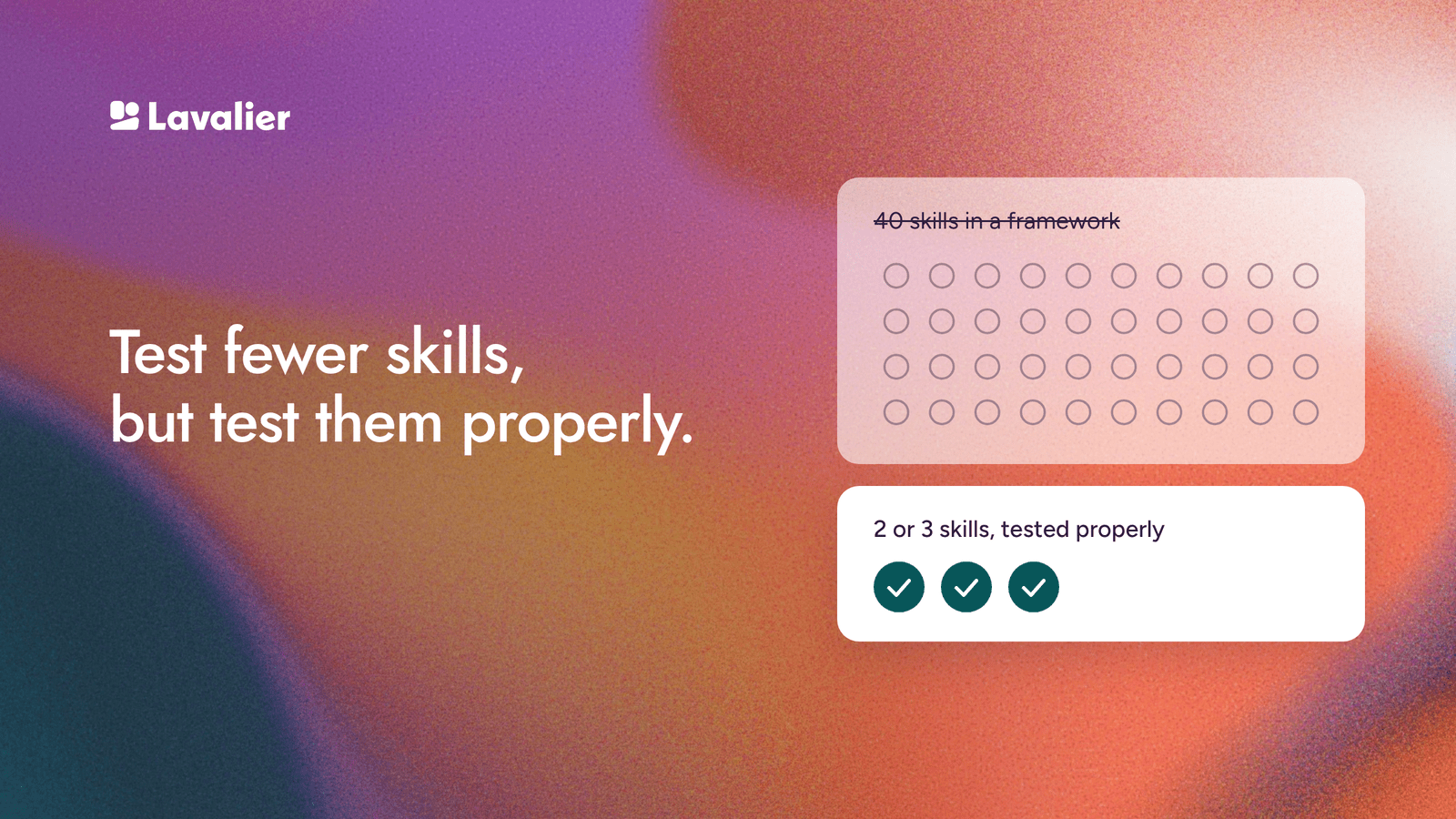
His alternative is much simpler. You just identify the two or three skills that genuinely matter for success in the role, then test those properly.
That could mean psychometrics, targeted interview questions, or a well-designed fit interview. Two skills you can assess with confidence are far more useful than 40 skills in a framework no one knows how to put to use.
Some companies like to “date” their candidates. Ten interviews in, and apparently they are still getting to know each other.
“They're sort of solving the problem the wrong way, which is, let's just add more process to it because we aren't getting the signal we need,” Gallagher observes.
That is the trap. If you are not learning enough from the interviews you already have, adding another one usually gives you more opinions rather than better evidence.
Hughes makes the same point from the recruiter’s side. Longer hiring processes have not necessarily produced better decisions. They have often produced slower ones and more exhausted candidates.
The time cost lands on the team, not the calendar. Closing one technical hire takes 23.3 hours of interview time across all the candidates involved, nearly double the 12.2 hours a business hire takes. Every extra round multiplies against the whole pipeline, not against one finalist.
Candidate experience gets plenty of attention. The hiring manager experience usually comes down to whatever the recruiter had time for that week.
Hughes thinks it deserves the same design.
His example is Gordon Ramsay's kitchen. Before service starts, the chef walks the front-of-house team through every dish so they can talk about what they're carrying to the table. What looks effortless at dinner was rehearsed hours earlier.
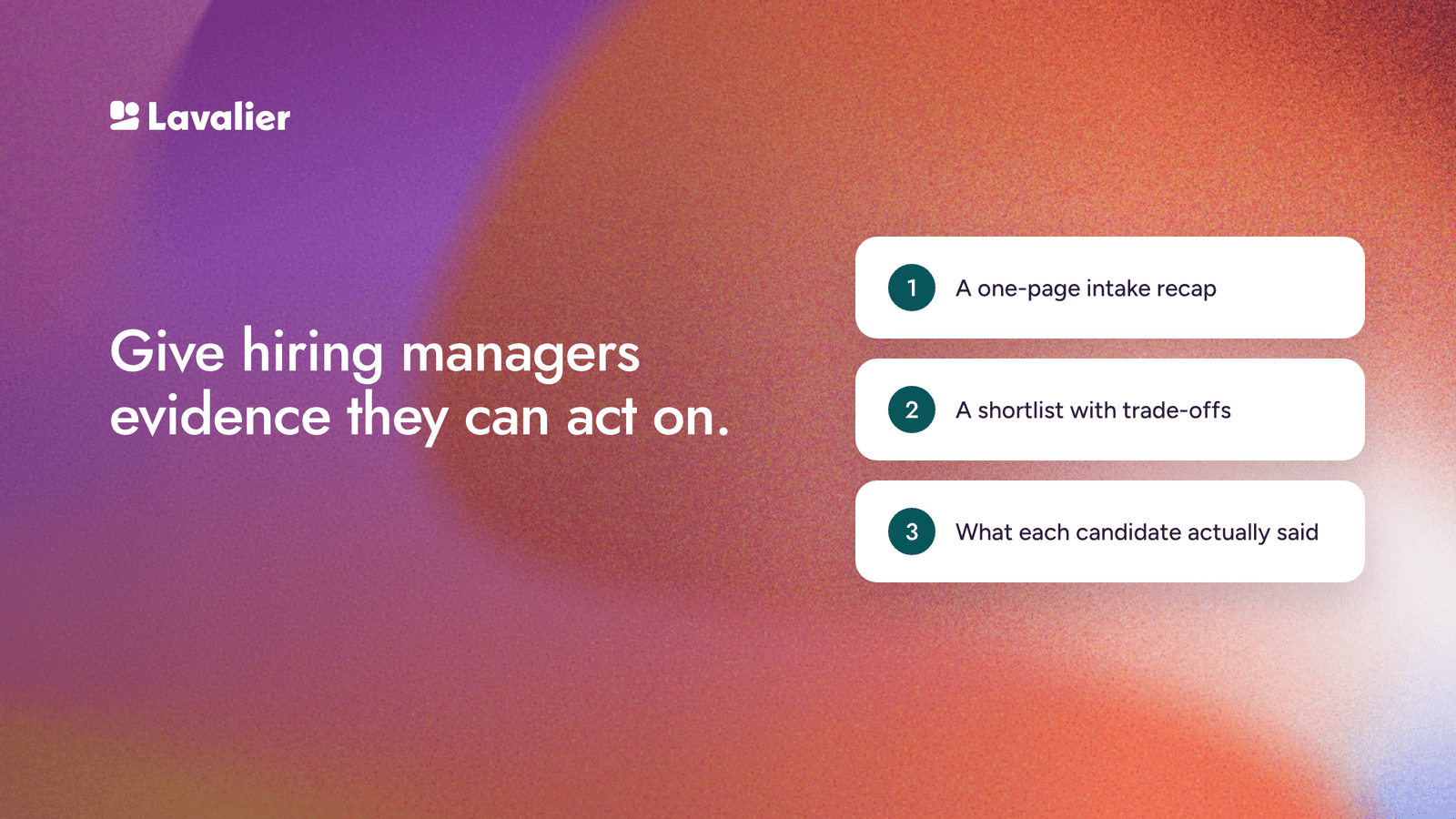
In recruiting, that rehearsal shows up in what you hand over:
That last one is where Hughes sees the biggest opening. "It's not just interview playback for the candidate, but it's also using that for the hiring manager as well," he says.
Give a hiring manager a summary, and they'll ask for another round to feel sure. Give them a record of what the candidate actually said, and there's nothing left to be unsure about.
Hughes is not against using AI to screen candidates, but he is against treating it like magic.
Humans bring bias into résumé review too. We make snap judgments, notice different things, and rarely leave a clean record of why one candidate made the cut and another did not. So Hughes sees a case for letting technology handle some of the initial sifting, as long as a person is still reviewing the long list and shortlist properly.
“You don't have an ability to audit the human,” Gallagher asserts to make the distinction clearer.
That is one advantage technology can offer. You can look at what the system screened out, test whether its decisions make sense, spot patterns, and change the rules if something is going wrong. With a human reviewer, that reasoning often disappears the moment the résumé is closed.
But that does not mean handing over the decision. “You still need the human to be making the decisions and guiding it,” Gallagher says.
The useful question for TA teams is whether they can explain what their AI is doing.
If an automated step rejected 500 candidates last quarter, you should be able to see what criteria were applied and whether those criteria still make sense.
Otherwise, you have not made screening more accountable. You have just swapped one black box for another.
Hughes ends up in Formula 1 territory here, but the analogy is hard to argue with.
A pit stop used to take seven or eight seconds. Now the best crews can get a car in and out in around two. Nobody found a magic lever that erased five seconds overnight. They shaved off fractions, tightened routines, and kept going.
Team Sky pushed the same idea further in cycling. Their riders kept getting sick from hotel rooms on tour, so the team sent a crew ahead to strip each room, clean it, and set up the same mattress and pillow every rider slept on at home. Fewer illnesses meant more riders finishing strong in week three.
“It's those little things that you do that make all the difference,” Hughes says.
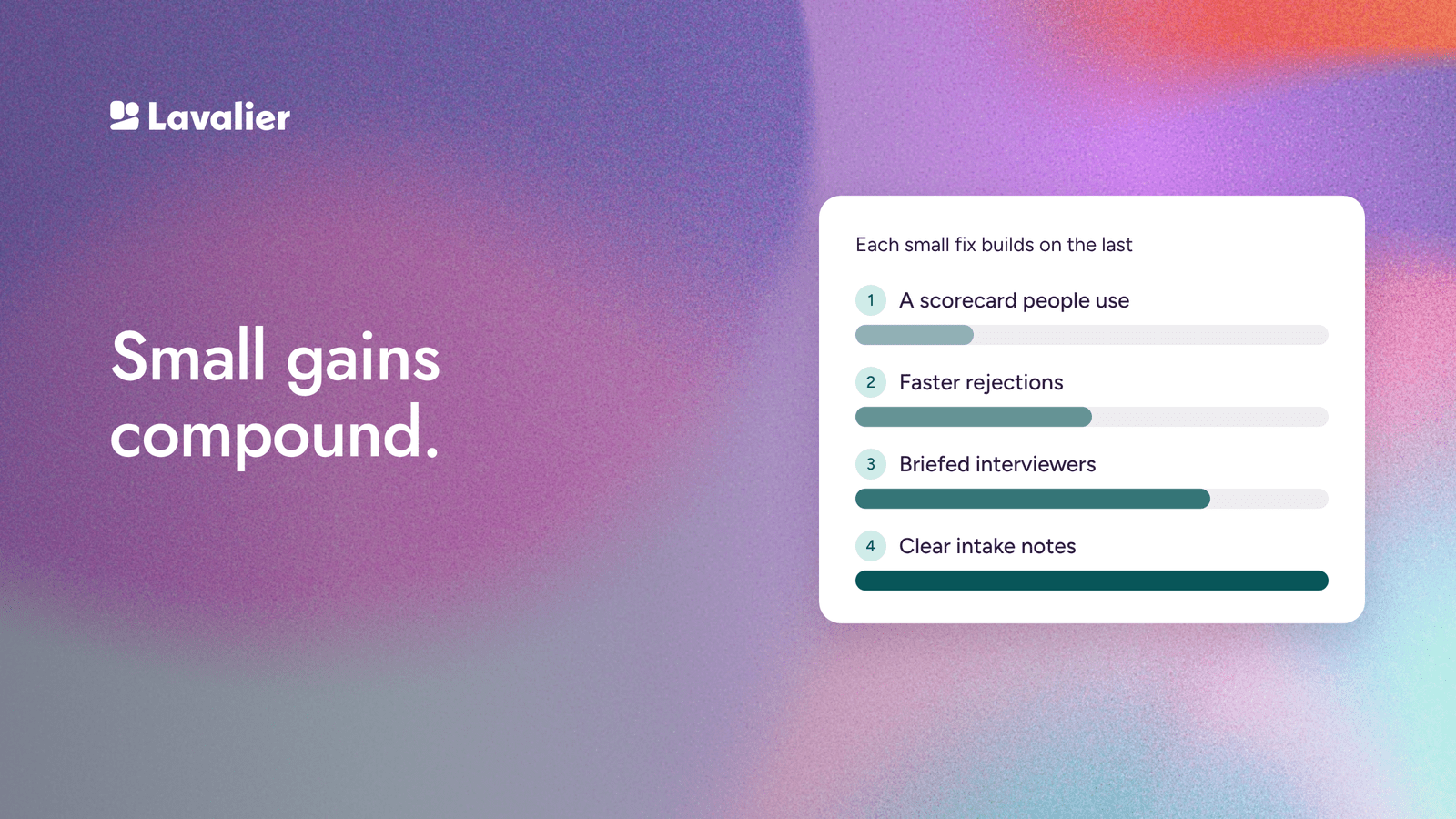
Recruiting has its own version of marginal gains.
A scorecard that people actually use. A rejection sent while the candidate still remembers the interview. An interviewer who knows what has already been covered. A hiring manager who does not have to ask, three weeks in, what everyone agreed to at intake.
Great recruiting arrives as dozens of small decisions that make the next conversation easier and the next handoff cleaner.
Hughes keeps coming back to Sliding Doors. A call gets made, a conversation goes well, and a career turns down a different road.
"As a recruiter, you changed that person's life," he says.
Everything above exists to protect that moment. The difficult part is the middle, where you prep well and still walk out of the debrief with five opinions and no evidence.
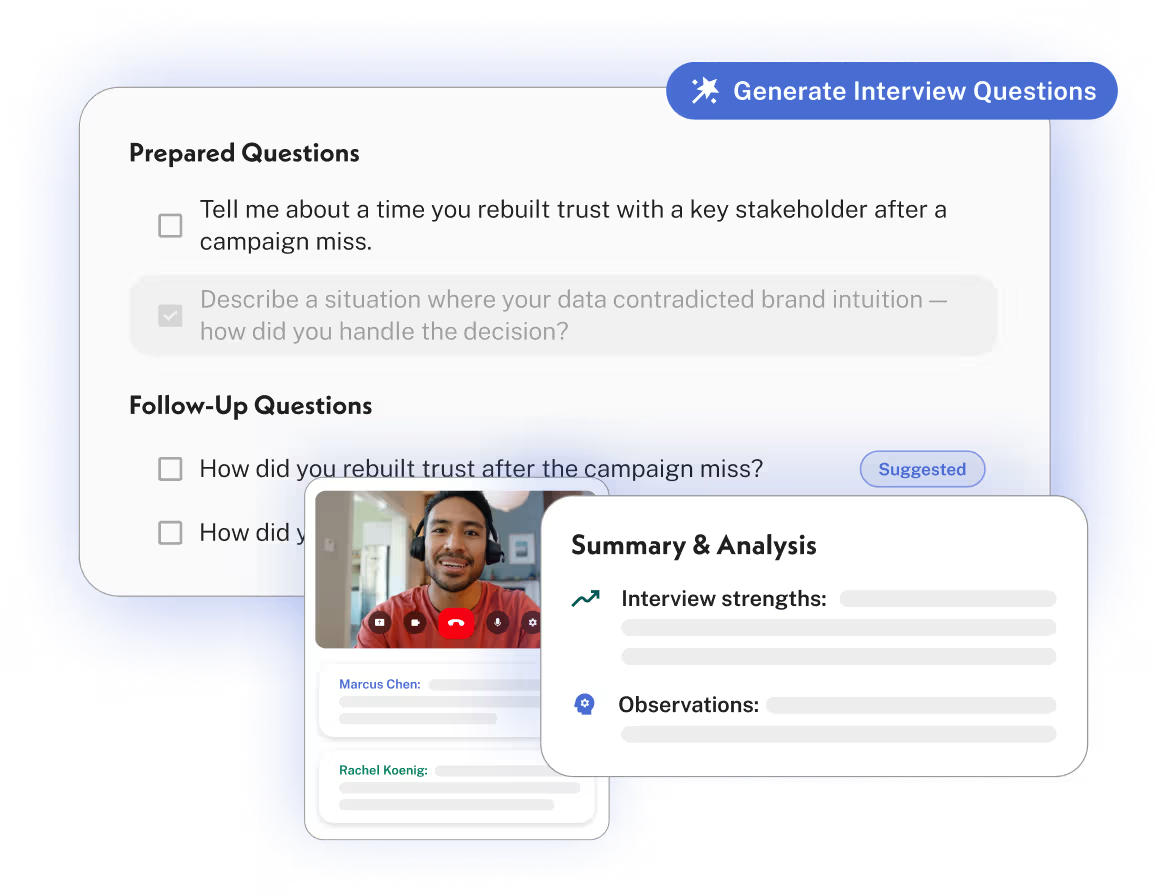
That's the gap Lavalier closes. It's a structured interview platform that starts at intake, turns what you agreed on into the interview plan, then prompts interviewers live so the evidence actually becomes useful.
Afterward, you compare candidates against the criteria you set, and every insight traces back to its source. There’s no black box to defend, and no round eleven.
Book a demo today.