
By Rhona Barnett-Pierce, Founder of Workfluencer Media
You've invested in candidate experience. You’ve built ATS workflows, automated status updates, maybe even tried AI screening to speed things up. You've put real time and budget into making your candidate experience better.
And yet candidates still complain. Glassdoor reviews still sting. Offer acceptance rates aren't moving.
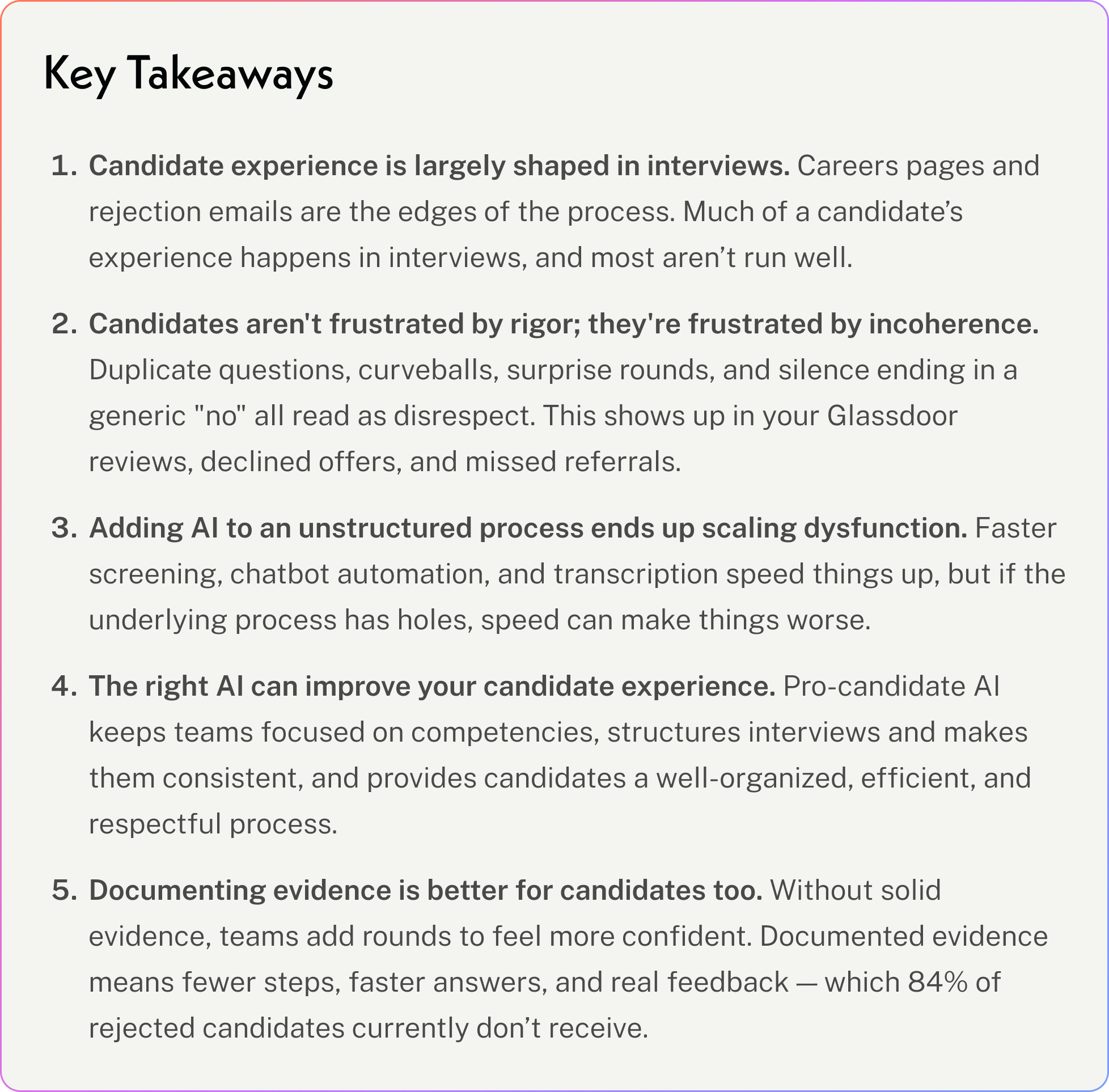
The problem is that you're optimizing the edges of a broken process.
Real candidate experience is about more than your careers page or your rejection email templates. It's largely shaped by what happens in the interviews themselves. And most interview processes are disorganized in ways candidates can feel, even if they can't articulate exactly what's wrong.
What looks like a candidate experience problem is actually a structure problem. And when you layer AI on top of an unstructured process, you don't fix anything. You just scale the dysfunction faster.
Most TA leaders don't get enough honest feedback about what their interview process actually feels like. Candidates who get rejected aren't filling out surveys. The ones who accept offers have already decided to be positive. So the real experience stays invisible.
But here's what candidates are thinking as they move through a typical process:
When the first interviewer asks about collaboration skills and the third interviewer asks the exact same questions, candidates notice. They start wondering whether anyone on your team actually talks to each other.
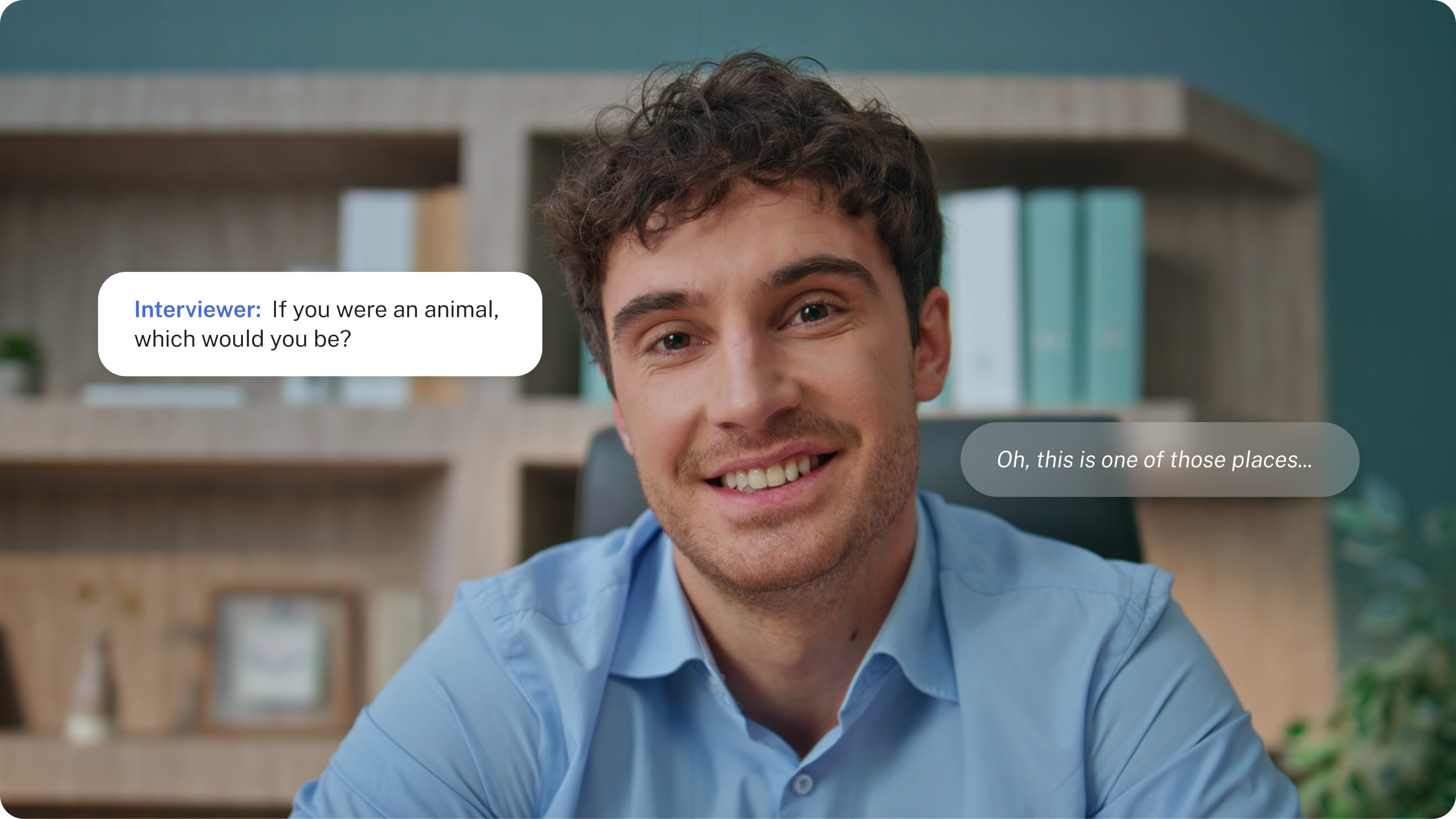
When a hiring manager goes off-script and asks curveball questions that have nothing to do with the role, candidates pick up on it. They question whether you even know what you're looking for.
When a fifth round gets added because the debrief was inconclusive, candidates read between the lines. They see a team that isn't organized enough to make a decision.
And when two weeks of silence ends with a generic rejection, candidates do the math. They gave you eight hours of their time, and you couldn't give them one sentence of real feedback.

They can feel when a process lacks structure, and they interpret that feeling as disrespect, disorganization, or both.
That perception doesn't stay contained. It shows up in your Glassdoor reviews, your offer declines, and the referrals you're not getting from candidates who walked away unimpressed.
Most TA teams have already tried throwing AI at this problem, and it's played out in predictable waves.
The first wave was AI-powered screening. The pitch was speed: get through more applications faster and surface the best candidates sooner. But what candidates experienced was rejection before a human ever looked at their resume, with zero transparency into why. It didn't feel “faster” to them. It felt like a black hole with an automated "no" at the end.
The second wave was chatbots for candidate engagement. The idea was to keep candidates informed and connected throughout the process. But talking to a bot, getting canned responses, and then hearing nothing for weeks doesn't feel like engagement. It feels like a facade.
The third wave is interview transcription tools that record and transcribe conversations. In theory, this creates better documentation and more data to inform decisions. It should also benefit candidates: interviewers can focus on the conversation instead of scribbling notes, and decisions should be grounded in what was actually said rather than what someone half-remembers a week later. In practice, most teams still run vibes-based debriefs. They just have transcripts now that nobody reads.
The pattern across all three waves is the same. AI has been deployed to automate pieces of a broken process. It screens faster, responds faster, and documents faster. But speed was never the actual problem. The problem is that the underlying process has no structure.
When you don't have clear hiring criteria defined upfront, AI can't help at any stage. Not screening, not interviewing, not decision-making. When interviewers aren't aligned on what "good" looks like for a role, AI transcripts just capture noise from five different people assessing whatever they personally believe is important. When decisions are ultimately gut-feel, all that AI-generated evidence sits unused in a dashboard nobody opens.
Research shows that structured interviews are 2x better at predicting job performance than unstructured ones. But most teams skip the structure because building it feels slow. They think they're choosing speed over process. What they're actually choosing is chaos. And candidates can tell.
AI amplifies whatever process it's layered onto. When that process is unstructured, AI just produces faster chaos. When the process is structured, AI becomes something candidates can actually feel in a positive way.
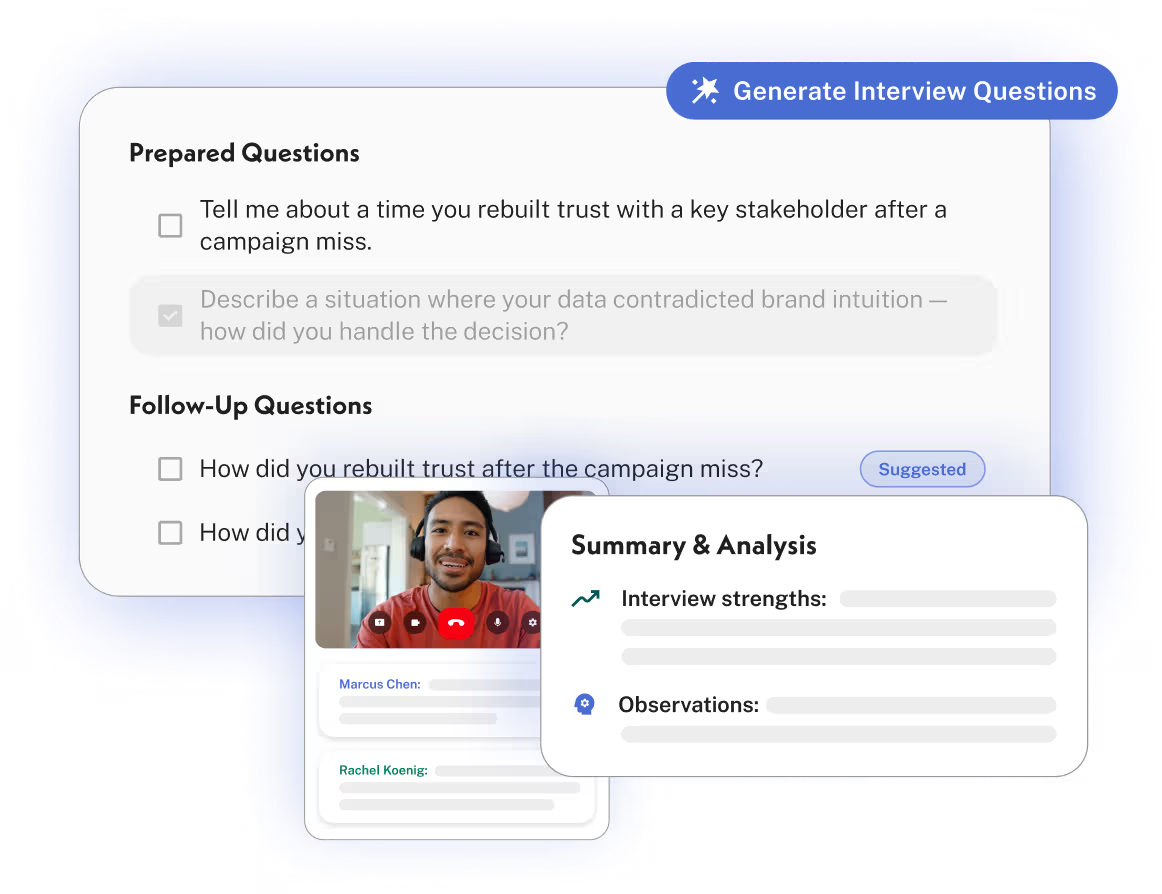
The solution isn't to add more AI. It's to use AI differently. Instead of automating a broken process, you use AI to build and enforce structure across the entire interview lifecycle.
A lot of interview dysfunction traces back to the same root cause: the recruiter and hiring manager never actually aligned on what "good" looks like for the role. Without that alignment, every interviewer ends up inventing their own criteria. One person evaluates communication skills. Another focuses on technical depth. A third is just looking for culture fit, whatever that means to them. Assessing different competencies across a loop isn't the problem. That's how it should work. The problem is when interviewers invent their own criteria instead of evaluating against what the team actually agreed matters for the role.
When you define the competencies and skills that matter before you ever start sourcing, everything downstream has a north star. Interview questions tie back to those competencies. Evaluations measure against them. Debriefs reference the same criteria everyone agreed on from the start. That alignment is what creates coherence, and coherence is what candidates feel.
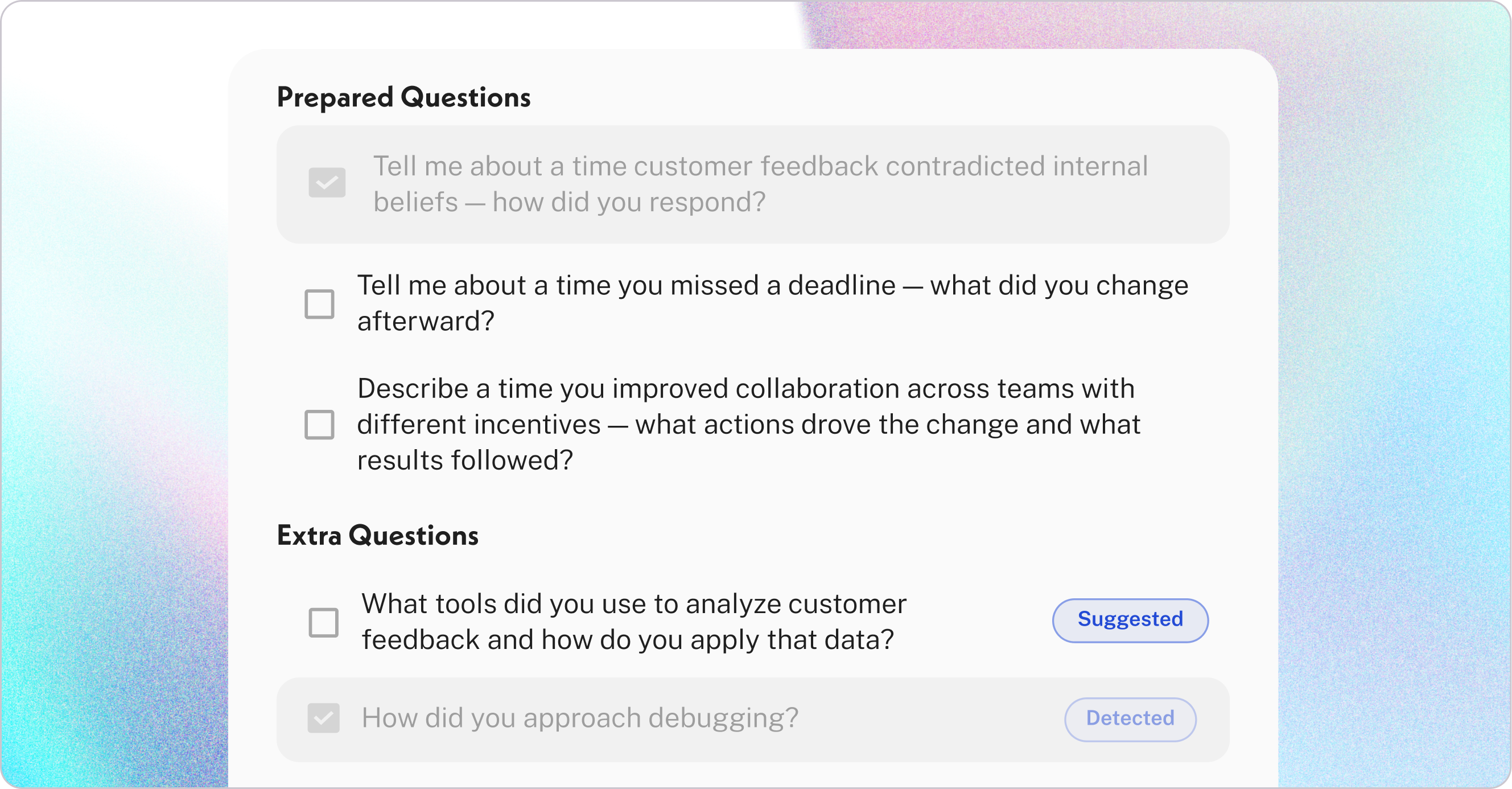
Once you've defined what matters for the role, interview guides should be generated from that intake, not from interviewer preference or whatever questions someone found on Google that morning.
This means every candidate gets evaluated on the same skills, with the same questions, in the same structure. That's not rigidity for its own sake. That's fairness. And candidates recognize fairness when they experience it. They walk away thinking, "Every conversation built on the last one. They clearly knew what they were looking for."
Even well-intentioned interviewers drift. They forget to ask a key question. They go down rabbit holes that aren't relevant to the role. They take sparse notes and rely on memory when it's time to debrief.
Real-time guidance solves this. AI-powered prompts keep interviewers focused on the competencies that matter. Notetaking happens automatically, tied to specific skills. The interviewer still runs the conversation, but they have structure supporting them throughout. They show up prepared, and candidates notice the difference. Candidates always know when someone is winging it versus when they've done the work.
Most debriefs aren't really evaluations. They're just everyone in a room trying to piece together scattered notes, half-remembered impressions, and gut feelings about who "seemed" impressive. One person loved the candidate. Another had concerns but can't quite articulate them. The hiring manager is trying to make sense of five different opinions with no common framework to weigh them against.
Without clear evidence to point to, teams default to the safest move: adding another round.
This is where tools like Lavalier's Skills Matrix changes things. It maps what candidates actually said in interviews to what the role actually requires, and it does this automatically as interviews happen. Every relevant answer gets tied to the role requirements in a single view. You can zoom in on one candidate or zoom out across your entire pipeline. Gaps surface before the debrief, not after, so you know exactly where the evidence is strong, where it's thin, and what hasn't been covered yet.
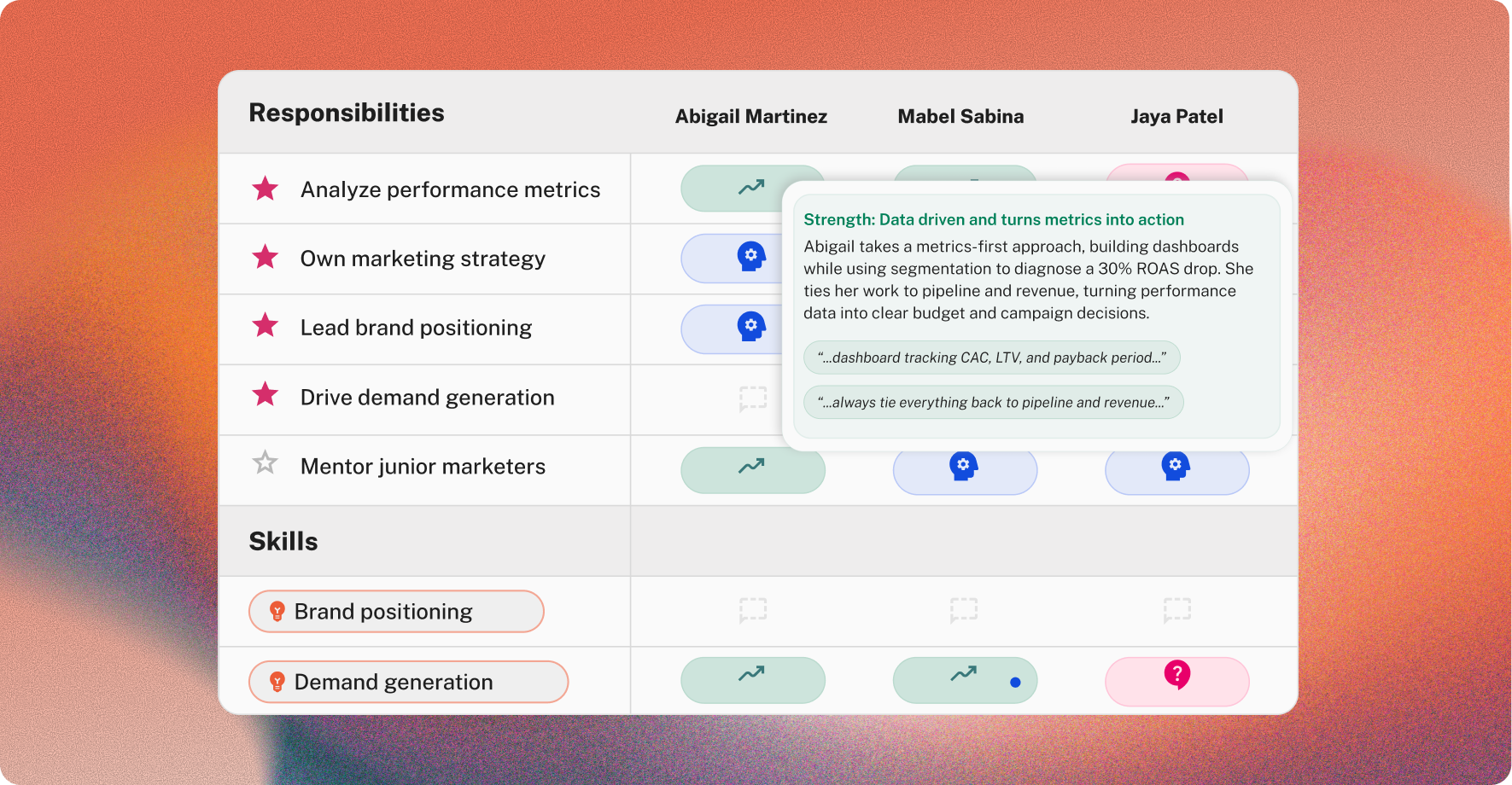
When everyone walks into a debrief looking at the same evidence, the conversation moves faster. You can defend exactly why someone cleared the bar or didn't. And the decision holds up to scrutiny because it's grounded in documented evidence rather than impressions.
What Skills Matrix won't do is make the call for you. That's still your job, and it should be. The point isn't to replace human judgment. It's to give that judgment something real to stand on.
The payoff for candidate experience is direct. Fewer rounds, because you're not adding interviews just to build confidence you should have captured the first time. Faster decisions, because debriefs don't drag on for weeks. And when you do reject someone, you can actually explain why, because you have documented evidence instead of "we decided to go another direction."
According to Textio's 2025 research on interview feedback, 84% of rejected candidates never receive any feedback on their interview performance. Structure makes feedback possible. Without structure, feedback is impossible because there's nothing to draw from.
Lavalier was built on a simple premise: the interview is where hiring decisions actually get made, and most interview processes aren't designed to make good ones.
Every feature connects back to the same skills defined at the start. That's what creates the coherence candidates feel: a process where every conversation builds on the last, every interviewer knows what they're evaluating, and decisions are based on what candidates actually demonstrated.
Lavalier isn't trying to automate the human out of hiring. It's giving humans the structure to do their job well.
Better candidate experience isn't a soft metric. It shows up in offer acceptance rates, Glassdoor scores, referral pipelines, and employer brand. The candidates you want most have options, and they're paying close attention to how your process feels.
But you don't improve candidate experience by adding chatbots or speeding up rejections. You improve it by fixing the structure underneath. When every candidate feels like they got a fair shot at demonstrating their skills, evaluated by people who clearly knew what they were looking for, the experience takes care of itself.