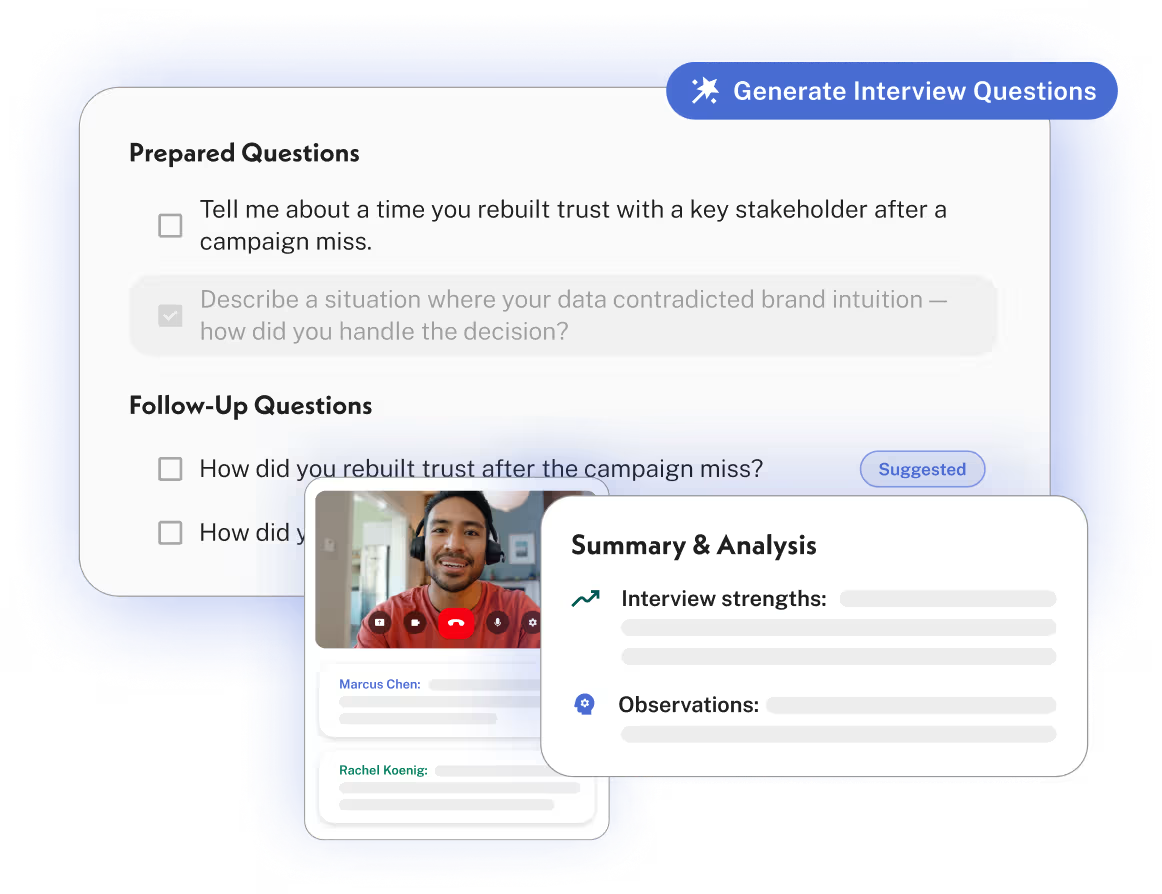
In structured interviews, every candidate for a role is asked the same questions and evaluated against the same criteria: the competencies that predict success in the job. This contrasts with unstructured interviews, where interviewers tend to improvise questions and form gut-feel opinions that make it difficult to make a strong hiring decision.
Unstructured Interview Process
Structured Interview Process
Loose intake
General competencies are discussed but open to interpretation
Organized intake
Core success criteria are clearly defined and hiring team is aligned
Varied questions
Interviewers may have a bank of suggested questions or may choose their own
Role-relevant questions
Each interview has required questions designed to measure specific competencies
Varied interviews
Each candidate gets a different interview depending on who’s running it and when
Standardized interviews
Every candidate is asked about the same competencies and gets a consistent evaluation
Weak feedback practices
Scorecards may be late or incomplete, feedback is thin or irrelevant to the job
Good feedback practices
Scorecards are complete, feedback is adequate and focused on skills/experience
Opinion-based debriefs
Discussions are swayed by interviewers’ preferences and impressions
Evidence-based debriefs
Discussions center on evidence from interviews showing who is strongest for the job
Questionable hiring decisions
Decisions are based on a blend of data and vibes, with little backup documentation
High-quality hiring decisions
Decisions are based on evidence, and are traceable and defensible
See where your process stands.
Take the 5-minute assessment and get your full interview maturity guide at the end.
More than a third of interviewers have commented on a candidate’s personality by the time the candidate receives a job offer.
Interviewers commenting on candidate personality
Interviewers not commenting on candidate personality
A candidate with an offer is probably a candidate the interviewer personally liked.
No offerOffer
Men and women get different kinds of personality feedback.
When interviews aren’t structured, teams hire “great personalities” — not necessarily great performers.
Structured interviews identify higher-quality hires in half the time.
2x more predictive of success
Structured interviews are twice as predictive of a candidate's job performance as unstructured interviews. 1
More satisfied candidates
One example: Rejected candidates at Google were 35% happier in a structured interview process. 2
50% less time interviewing
Structured interviews reduce a role's interview process by ~12 interviews and 12+ hours. No more "one more" rounds. 3
Improved quality of hire
Standardized role-relevant questions keep interviewers from drifting and help them better assess skills and experience.
Defensible decisions
Well-designed interviews produce comparable hiring evidence, so decisions are based on data and explainable later.
Reduced attrition
40% of employee attrition happens within year 1—often due to performance gaps that structured interviews would find. 4
See how your interview process compares.
Answer a few questions about how your team hires. You'll get a maturity score, benchmarks, and a guide to running more structured interviews.
6 questions
The Interview Structure Scorecard
Is your hiring structured—or does it just feel that way?
Answer on instinct — current state, not where you intend to be next quarter. For each of the six dimensions, pick the rung that honestly describes what actually happens today.
6 questions · 5 minutes · no email
You’ll get a read on six things:
1Defining what matters
2Asking the same questions
3Recognizing a strong answer
4Calibrating the rubric
5Submitting feedback independently
6Making the final call
ROI CALCULATOR
What is structured interviewing worth to your budget?
50%
Enter your open roles to begin.
Calculating your estimate…
Running your roles through Lavalier's TA Metrics and Value Map research.
Your Estimate
Here's what your open roles are worth.
Adjust your inputs in the box above and watch the estimate update. Toggle the headline between time and money — every card below stays in view.
Total estimated savings
$0
Based on an average time-to-fill improvement of eight days per role — about eight working hours a day — across every open role.
Efficiency
Time-to-fill savings
0 days
Time-to-decision savings
0 days
Time-to-hire savings
0 days
Interviews per hire (change)
0 → 0
Interviewer hours given back
0 hours
Cost Savings
Vacancy-cost savings
$0
Bad-hire cost avoided
$0
Offer-acceptance labor saved
$0
Training cost saved
$0
Quality Impact
Up to 2x more predictive
Structured interviews predict on-the-job performance far better (r=.51 vs .38).
~80% more consistent
Inter-rater reliability jumps from .37 to .67.
89% vs. 25%
89% of orgs say quality of hire is critical. Only 25% feel confident measuring it.



.png)
.png)
.png)